
Kitchen Renovations
Kitchen Renovations
At Renovation Navigator, kitchen renovations are guided through a structured planning-first process that helps homeowners make key decisions early, align priorities with budget, and move into construction with clearer expectations and stronger oversight from start to finish. This expands on the current kitchen page, which already centers layout, function, long-term use, and early decision-making.
Understanding Kitchen Renovations


KITCHEN RENOVATION

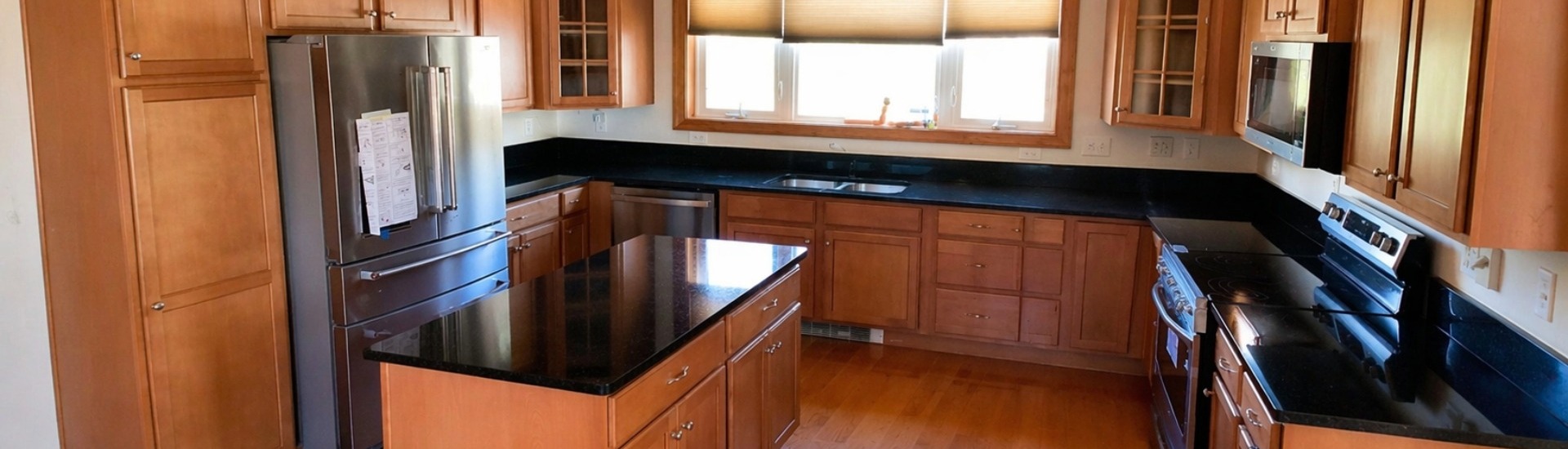
A kitchen update that paired warm cabinetry with dark stone surfaces, long countertop runs, and clean sightlines across a window-filled wall.
Before


This kitchen renovation features full-height wood cabinetry, dark stone countertops, and a central island that adds both prep space and storage. The finished space feels clean and well-balanced, with stainless appliances, glass-front cabinet accents, and a warm wood floor that gives the room a more grounded, finished look.
Bright Contemporary Kitchen Renovation
A full kitchen renovation with layered cabinetry, updated lighting, refined storage, and a brighter, more composed finish throughout the space.
Bold Two-Tone Kitchen Renovation
This kitchen renovation pairs crisp white upper cabinetry with deep blue lower cabinets and island millwork for a clean, high-contrast finish. Marble-look countertops, white subway tile, and light tile flooring keep the space bright and balanced, while the central island adds both prep space and everyday function.
Warm Cabinetry and Stone Kitchen Update
A kitchen update that paired warm cabinetry with dark stone surfaces, long countertop runs, and clean sightlines across a window-filled wall.
Key Considerations When Planning a Kitchen Renovation
What’s Typically Included
Scope varies by project, but commonly includes:
Consultation
Design Phase
Construction
Walkthrough
Planning & Pricing
Completed Projects
Fixtures, backsplash, flooring, and lighting installation
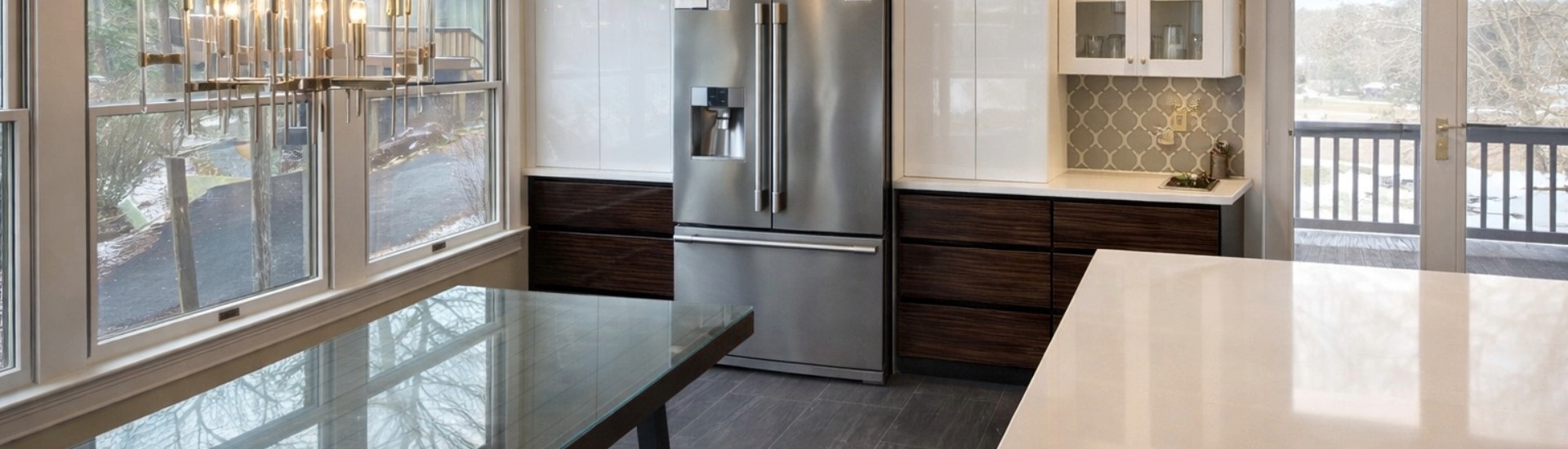
Fixtures, backsplash, flooring, and lighting installation
Common Kitchen Renovation FAQs
Kitchen renovations can be more complex than they first appear because so many systems and decisions overlap. Layout, storage, circulation, finishes, lighting, and appliance placement all need to work together, which is why careful planning matters so much.
That is the goal of the planning process. The more clearly the kitchen layout, scope, and material direction are defined early, the easier it becomes to understand what is shaping cost and timeline before construction starts.
Timing depends on the size of the kitchen, the scope of work, material selections, and whether the layout is being significantly changed. Early planning helps reduce avoidable delays and supports a more organized construction phase.
That depends on how the kitchen is used, but common priorities include layout efficiency, storage, workflow, material durability, lighting, and how the space connects to adjacent rooms. A good renovation plan helps organize those priorities before the work begins.